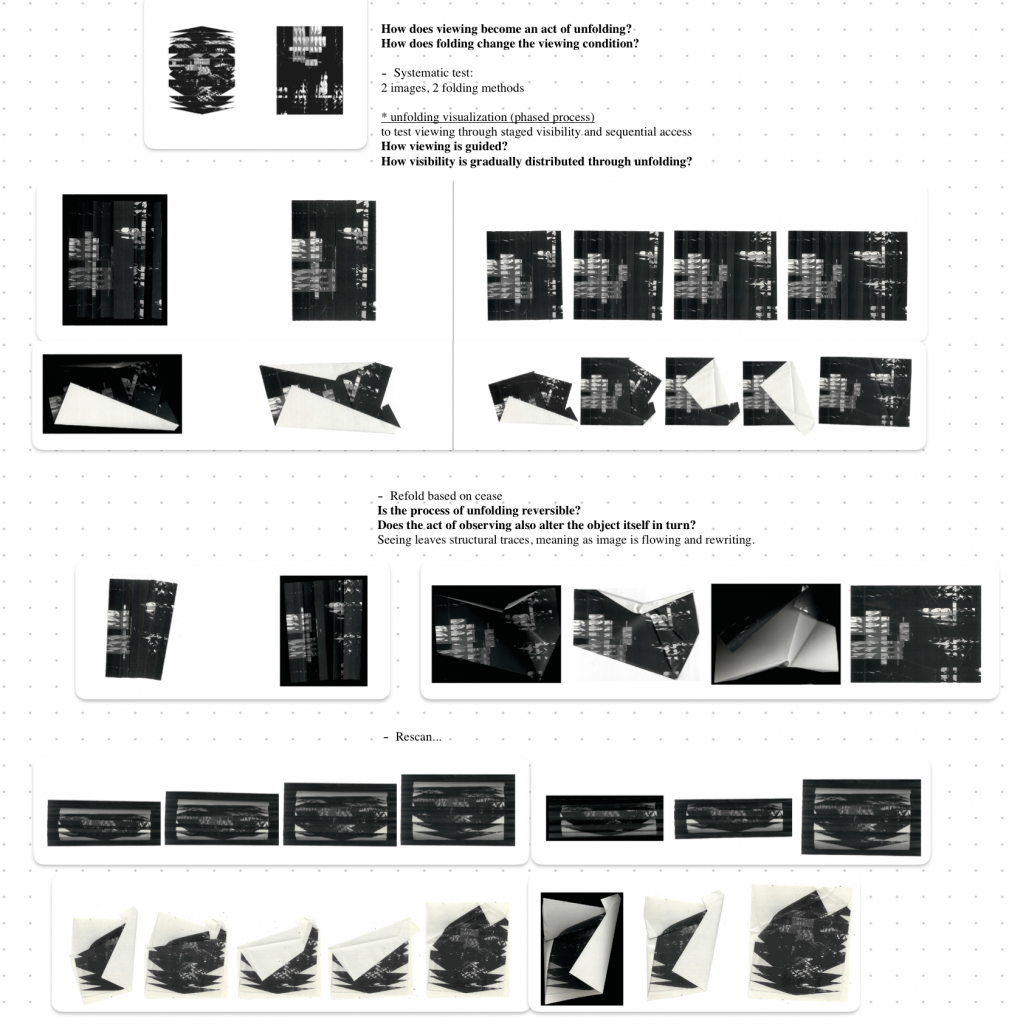
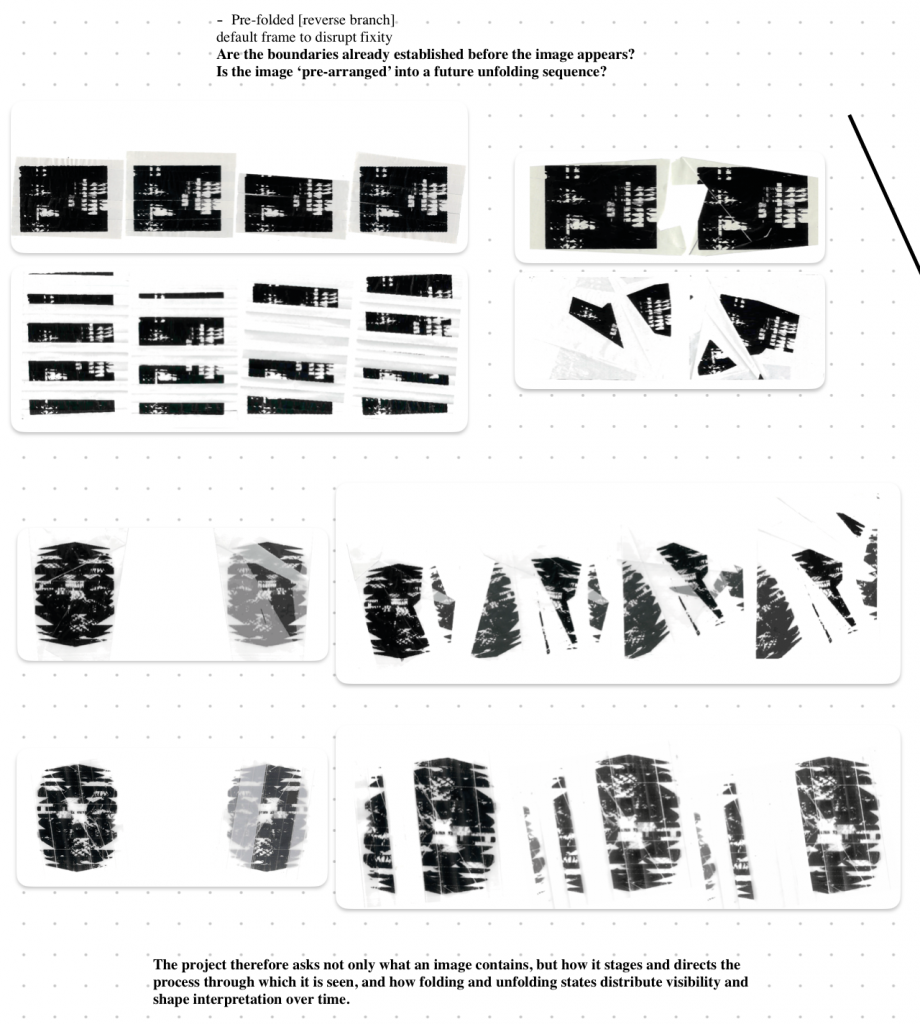
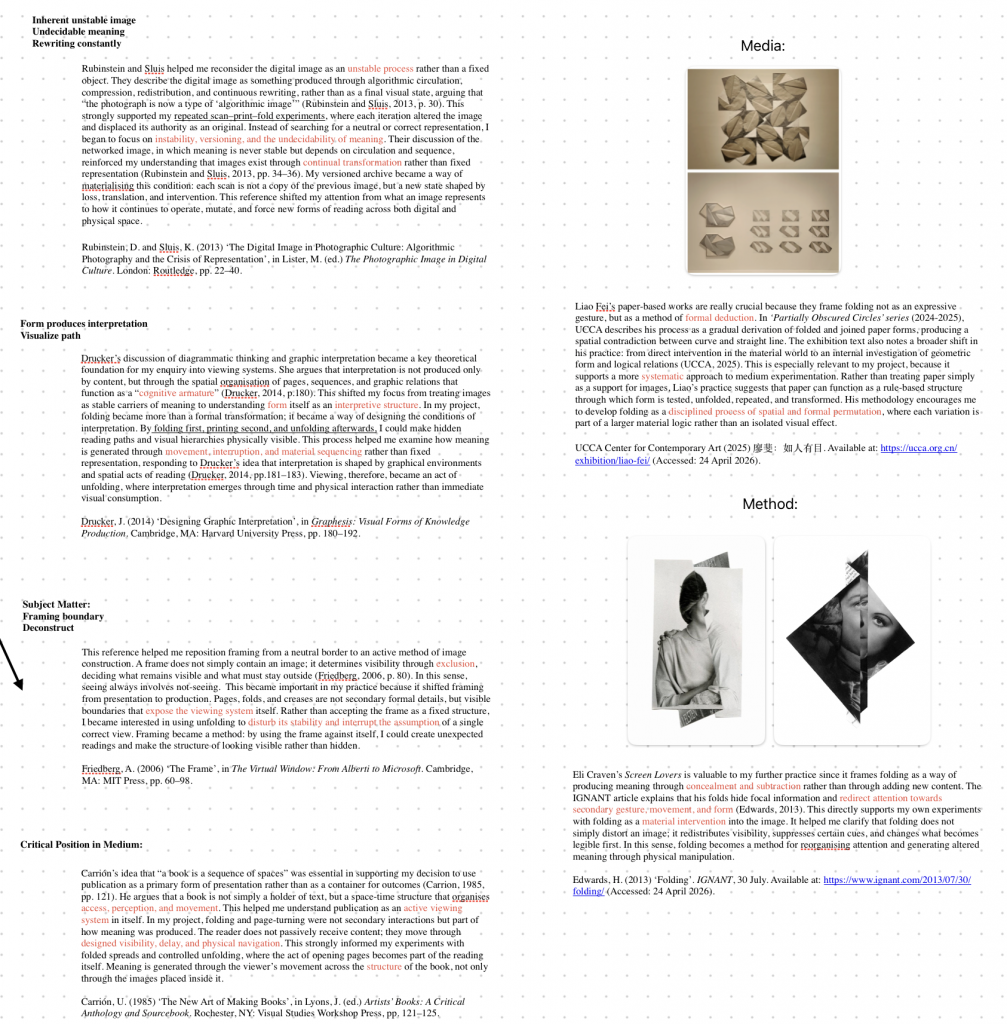
I then focused on physical folding. This time, I framed the project around only two digital stage outcomes, using only regular folding and random folding. I adopted unfolding as a new fixed practice method in order to test the relationship between viewing and unfolding. How is viewing guided, and how is visibility distributed? I recorded the process of unfolding the image step by step from its folded state, in an attempt to observe how structure affects viewing. Considering the materiality of paper, creases can also be used to fold the image back again, and refolding may generate new images. I printed the stage scans and carried out another round of intervention, in order to establish a versioned exploration. This action was largely inspired by Liao Fei’s experimental methodology. Friedberg’s theory of the frame also deeply influenced my thinking about image boundaries. It inspired me to reverse the sequence: to fold blank paper first, print directly onto it, and then unfold it, in order to see how a pre-set frame might disrupt the stability of the image. This also connects to Rubinstein’s argument that meaning is undecidable and constantly rewritten.
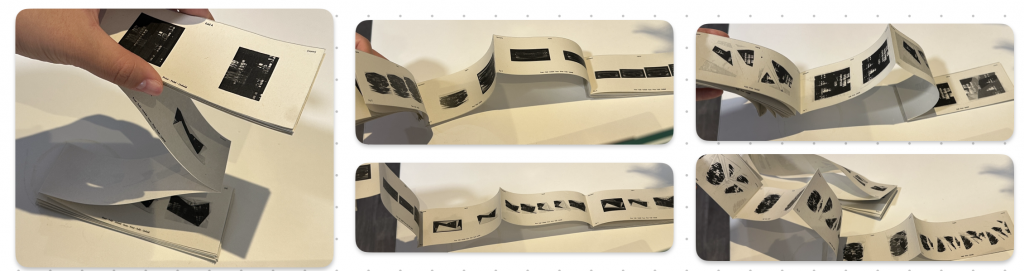
In the end, I still chose pages as a way to collect fragments of evidence. This time, the binding took the form of a long sequence, which could be folded into units or read continuously, allowing the practice to develop in a more linear and in-depth way. This was supported by Drucker’s argument that interpretation is produced by form, and that sequence can be used to design viewing.
The annotated bibliography should follow the final formal post. This section only presents my initial thoughts from that week, all of which were later rewritten.
Leave a Reply