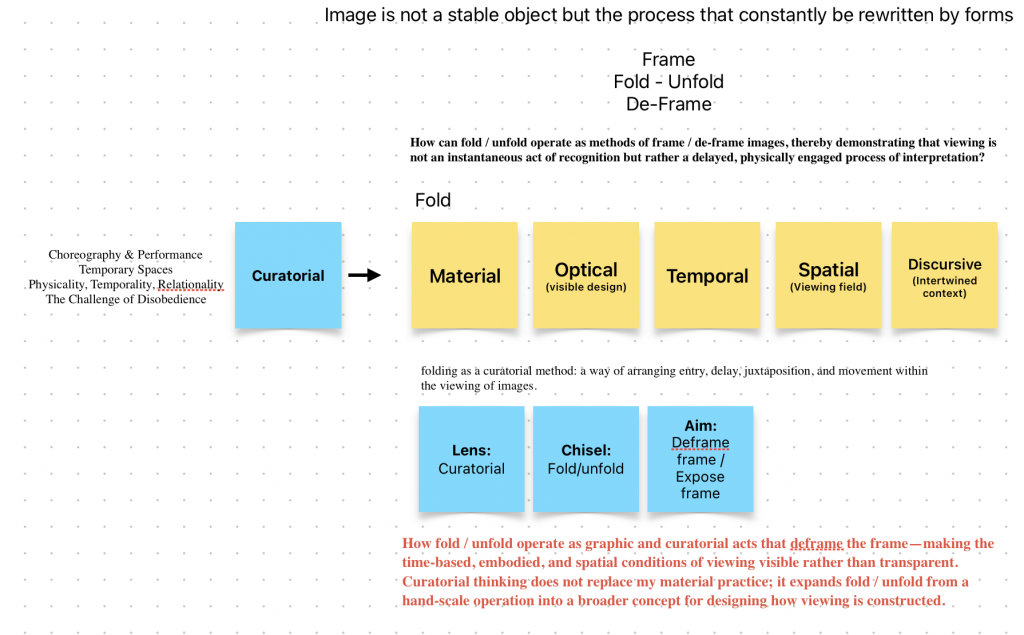
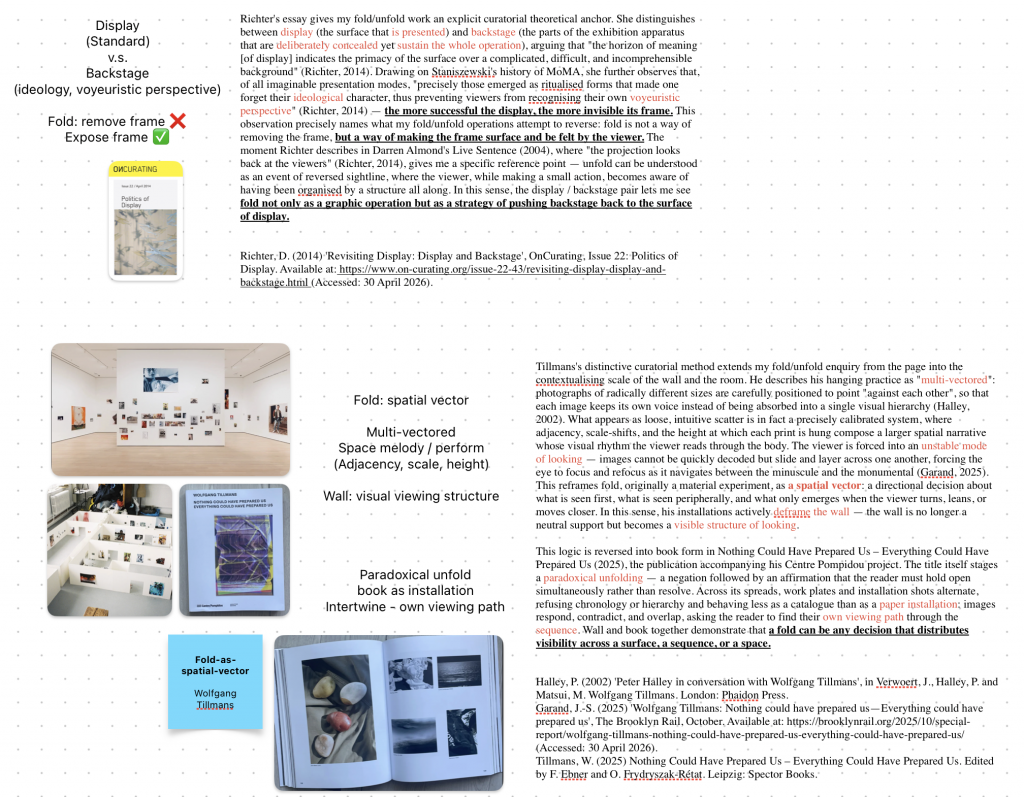
From the previous practice, I summarised frame / deframe and fold / unfold as key terms. The final enquiry of the previous project was: How can fold / unfold operate as methods of frame / de-frame images, thereby demonstrating that viewing is not an instantaneous act of recognition but rather a delayed, physically engaged process of interpretation? After reading Wolfgang Tillmans’ work and design thinking, I felt that a curatorial perspective was highly relevant to the further development of image viewing systems. As a form of staging, it also provided grounding for the exploration. Tillmans curates his own images, displaying and presenting them within space, models, and paper. As a result, my enquiry became contextualised as: How can fold / unfold operate as graphic and curatorial acts that deframe the frame — making the time-based, embodied, and spatial conditions of viewing visible rather than transparent? Curatorial thinking did not replace my material practice; rather, it expanded fold / unfold from a hand-scale operation into a broader concept for designing how viewing is constructed.
Unfortunately, this enquiry was quickly challenged and rejected, because it was in fact closer to a statement than a question.
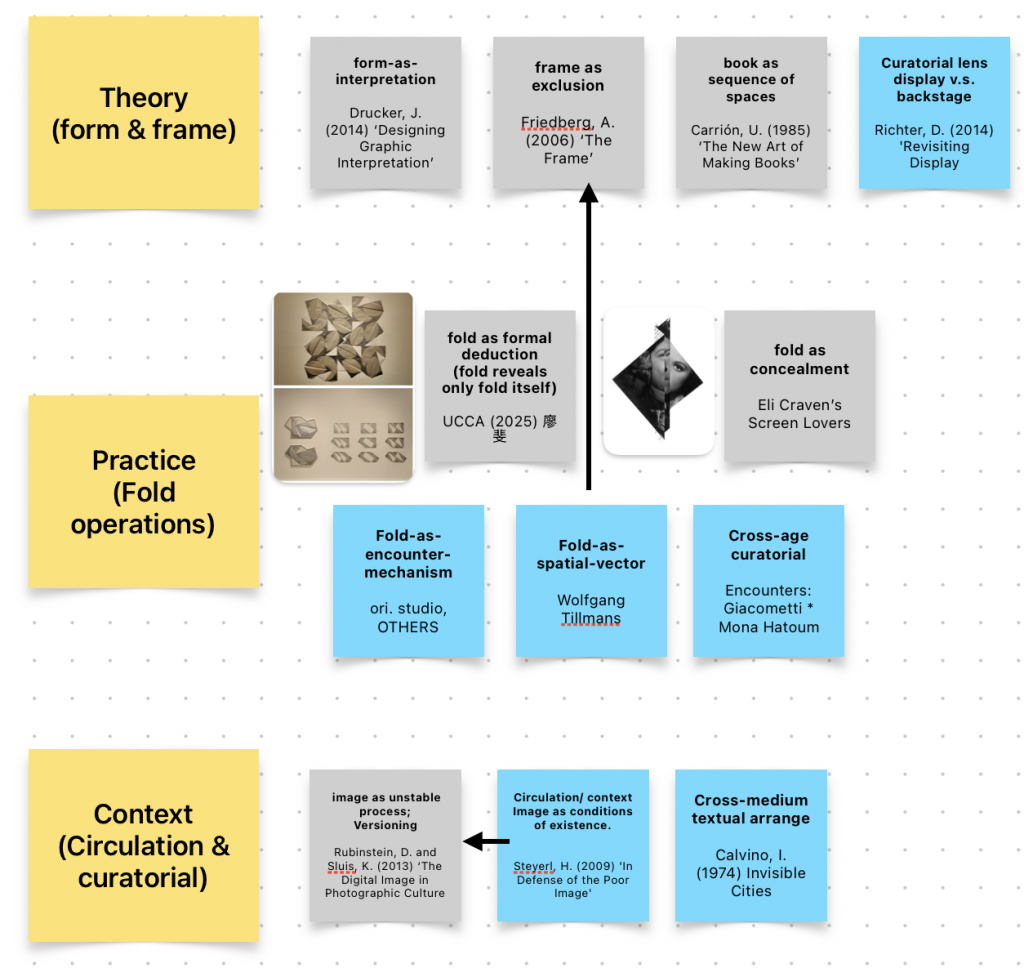
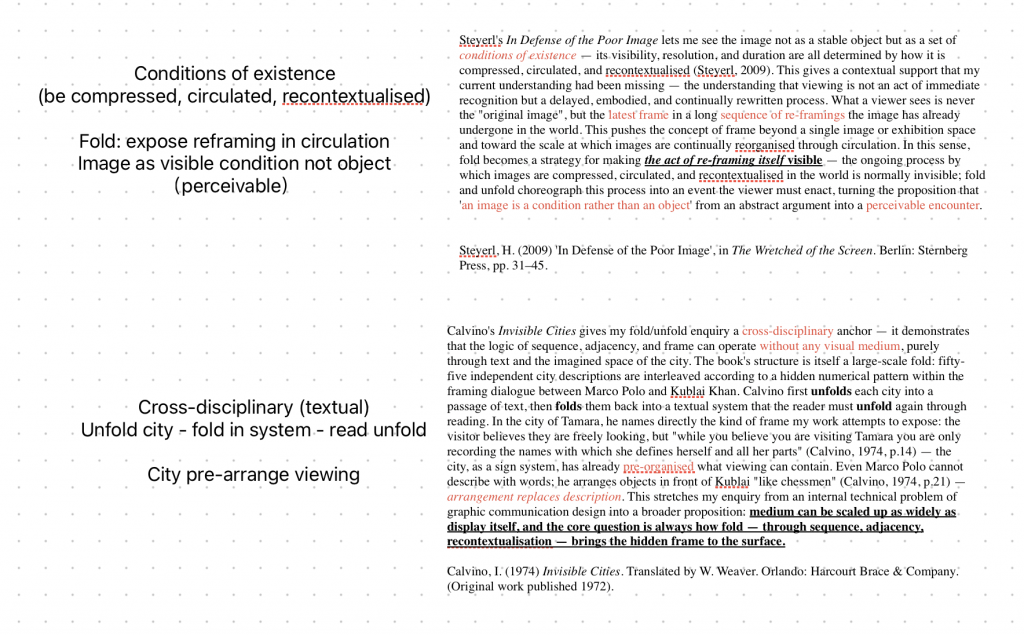
The reference list retained the previous six references as a way of looking back and rewriting, while also adding new ones. Together, they were divided into three groups: theory, practice, and context. The politics of circulation discussed in In Defense of the Poor Image made me realise that the image exists under material conditions, and that the way the image itself becomes visible is worth exploring and exposing. Invisible Cities offered an interdisciplinary perspective: through the systematic classification and juxtaposition of text, it made me recognise the power of arrangement. At the same time, I specifically read a curatorial journal issue and found Richter’s concept of display and backstage, which effectively supported my exploratory methodology. The article analysed how a number of landmark exhibitions expanded from the white cube towards participatory, and even anti-curatorial, forms of exhibition-making.
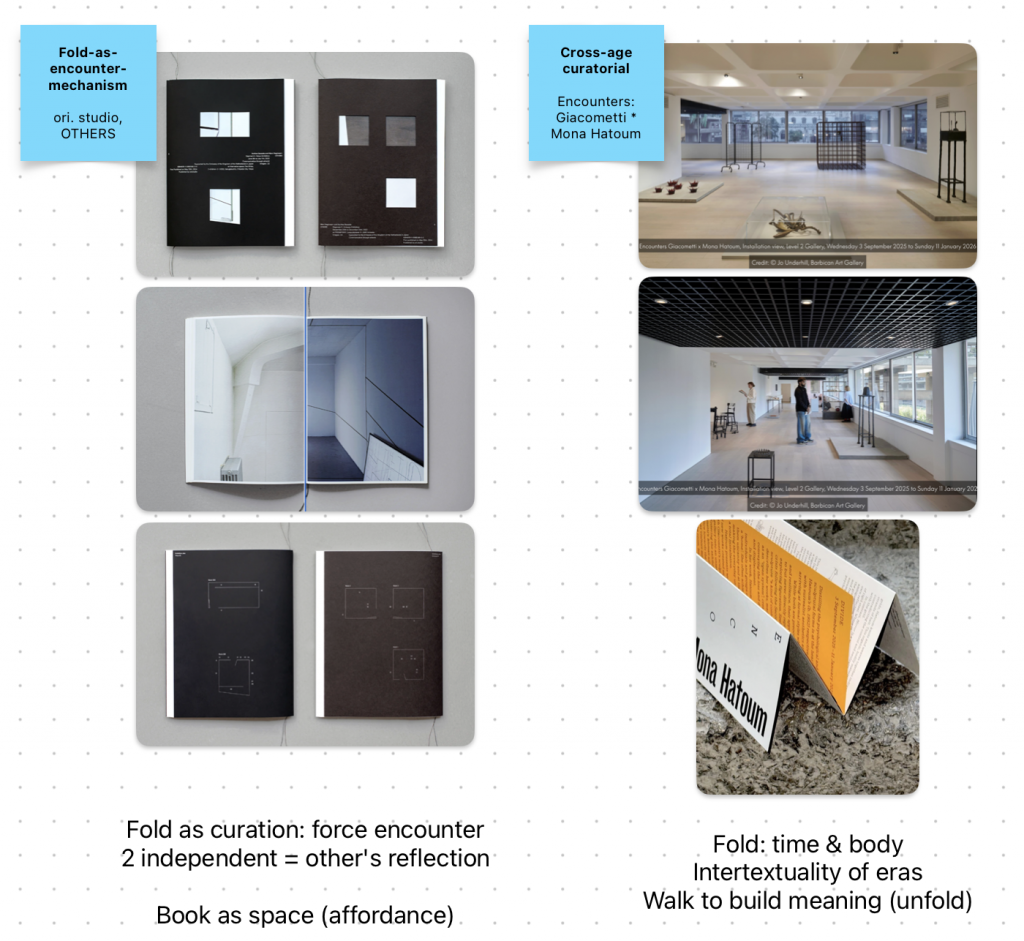
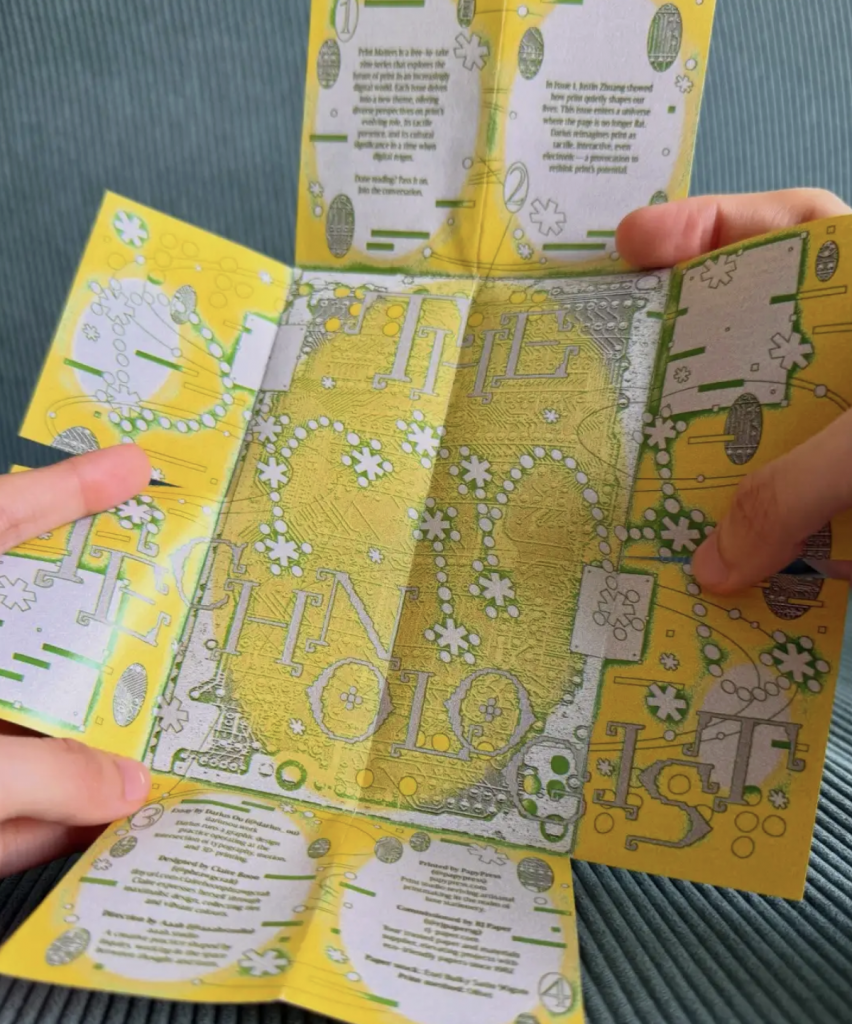
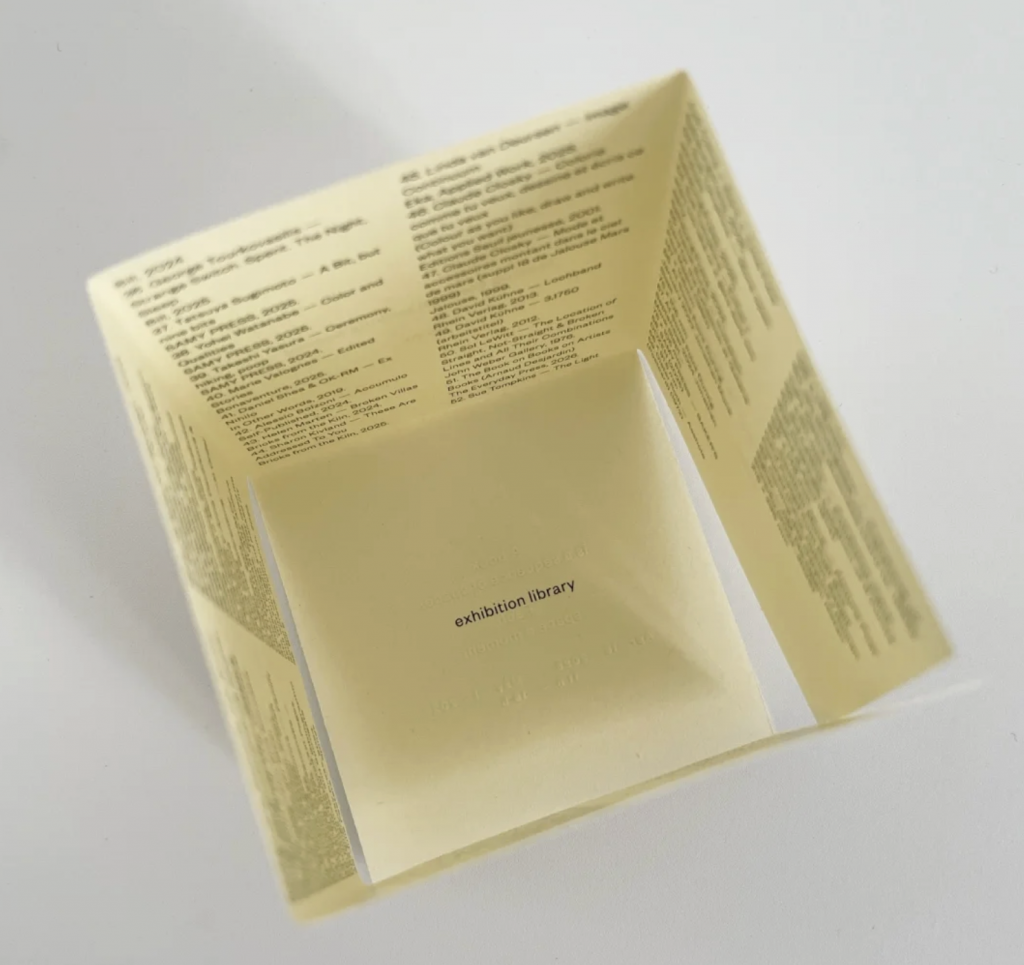
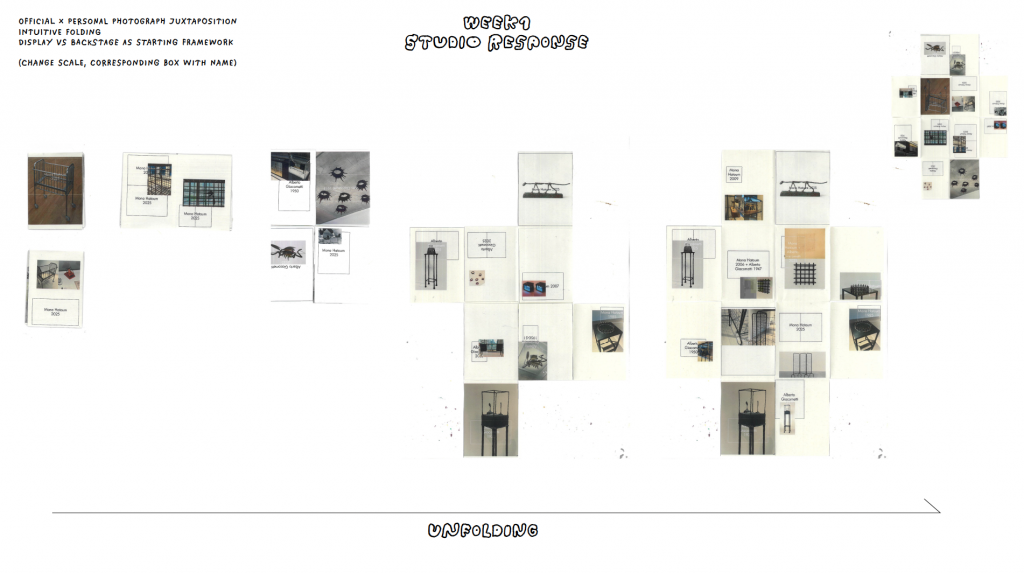
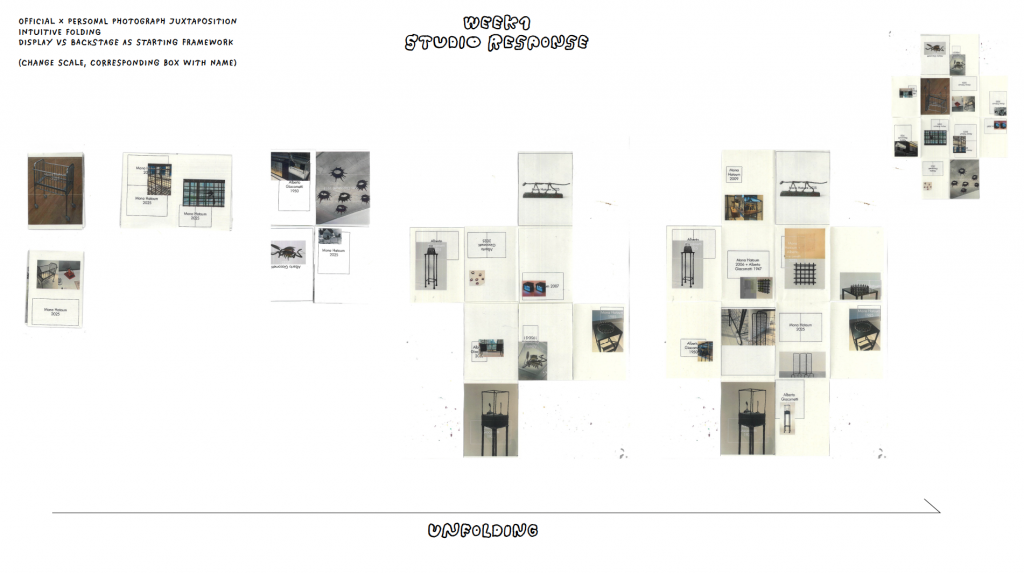
I therefore chose the Giacometti exhibition that I had visited as the starting point for my studio response. Learning from Tillmans’ layout, I juxtaposed official photographs with images I had taken myself, while adjusting scale, adding corresponding frames on the front and back, and containing them within an intuitive folding structure. I was inspired by this booklet and reworked it. The structure contains many units, which provides multiple ways of folding and viewing, and it opens from all four sides towards the centre, which fits well with the experience of visiting an exhibition. The OTHERS, which I also liked, coincidentally concerns folding an exhibition into pages, and it supported my experiment together with the other references.
The annotated bibliography should follow the final formal post. This section only presents my initial thoughts from that week, all of which were later rewritten.
Studio Response
Leave a Reply