I realised that hierarchy was not the question, but rather a finding that needed to be defined. My enquiry was therefore refined again into: How does folding shape the way exhibition information is read within a guidebook? My prototype would function as a reflective reading device that reorganises information.
I first reduced the informational noise within the three folding structures and tested them with three people, without explaining the background. I observed how they responded and received many creative interpretations: for example, the general fold was read as being like a treasure map, while the intuitive fold was understood as being like a game map. I also found that labelling and repetition could affect informational hierarchy and reception. Fold became a form of physical embodiment.
In order to simplify the information without losing Richter’s concept, I extracted the exhibition motifs and concepts: walk and cage, which I later changed to cube. Concepts can also function as backstage, and can be integrated into the meaning-generating process of folding. They also closely relate to viewer agency within the frame.
In the final prototype, I selected nine works from the exhibition by two artists, all relating to cage and walk. Through repetition, labelling, and a unified framework, I placed them into folding modules. The three elements in each module do not belong to the same work; instead, the reader has to keep folding and unfolding in order to find the relations between them. The process of unfolding becomes similar to walking inside a cube: both exposed and framed.
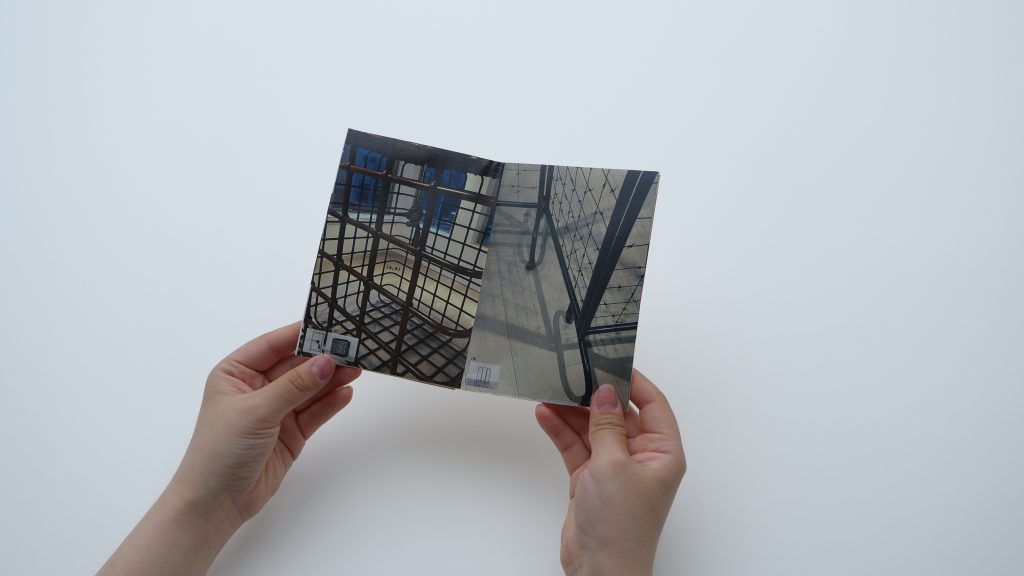
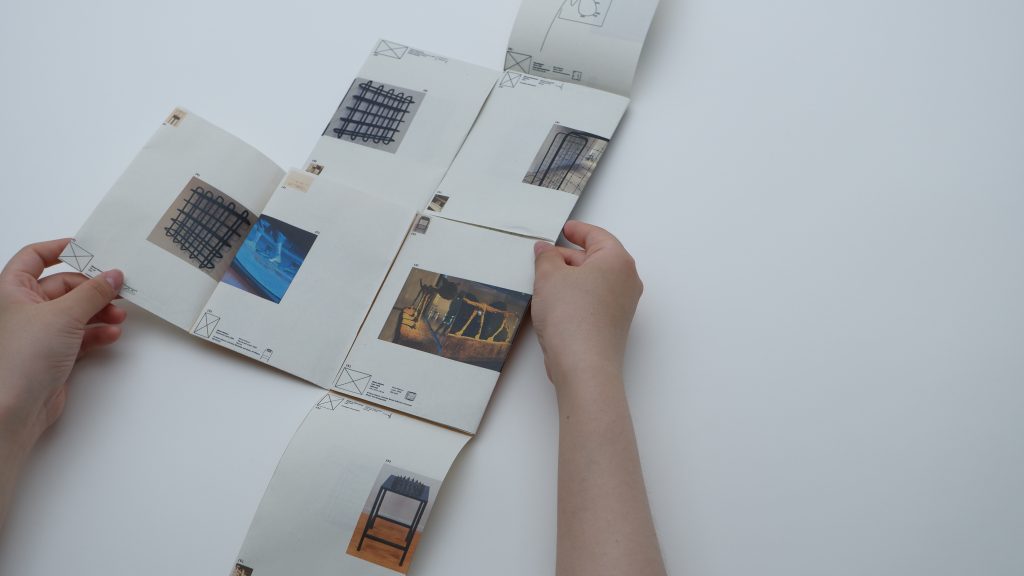
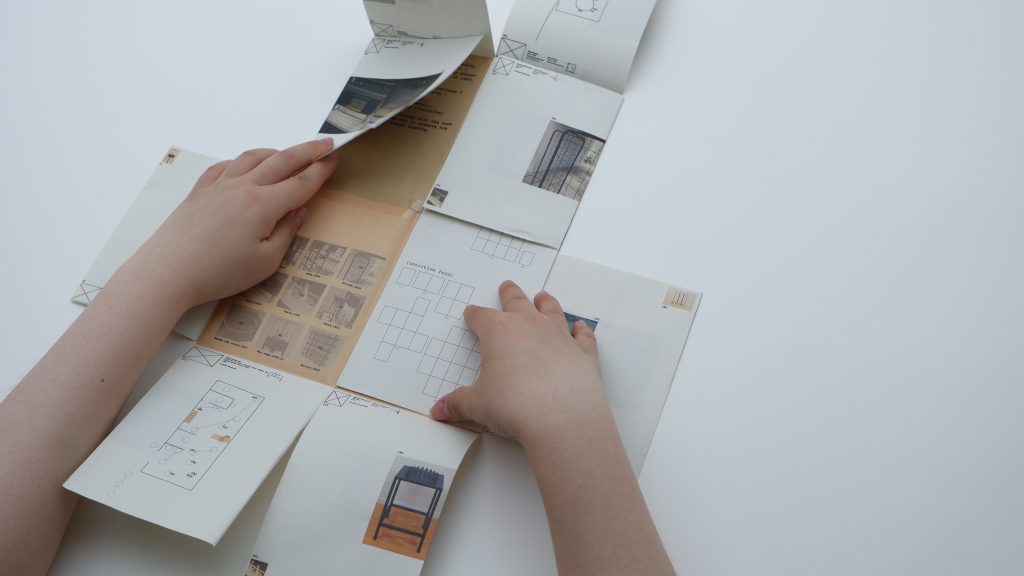
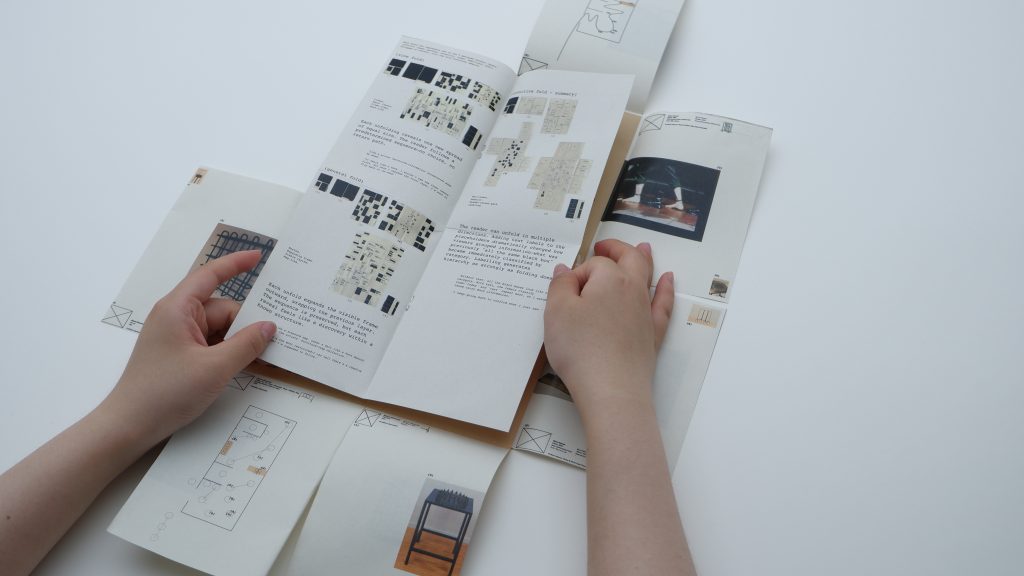
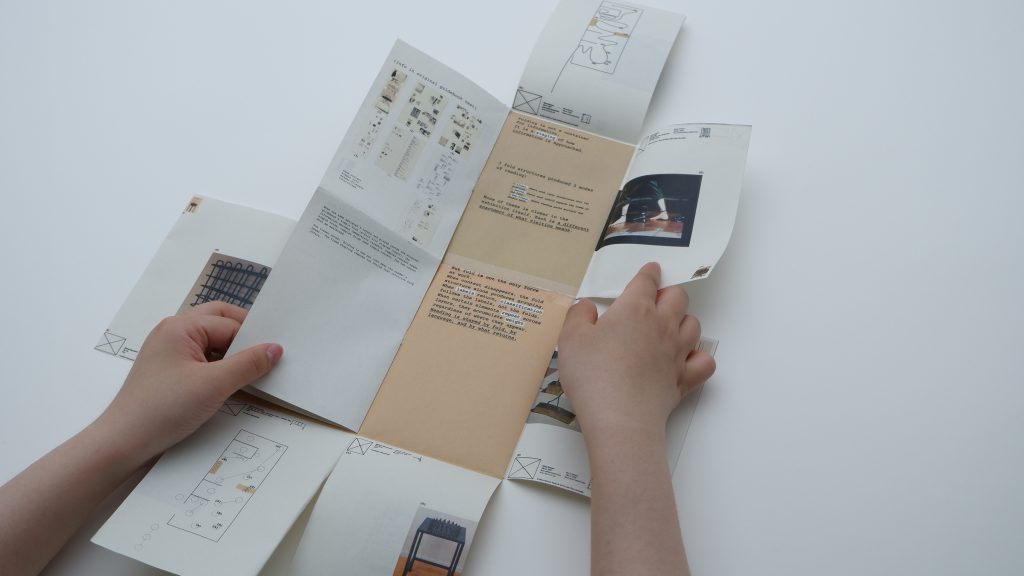
The feedback on the final prototype was that the visual practice and the research trail should be separated. At that stage, the work felt more like an explanatory archive than a structure still open to exploration. I therefore optimised this during the production of the video essay, as explained in detail in the video.
Leave a Reply