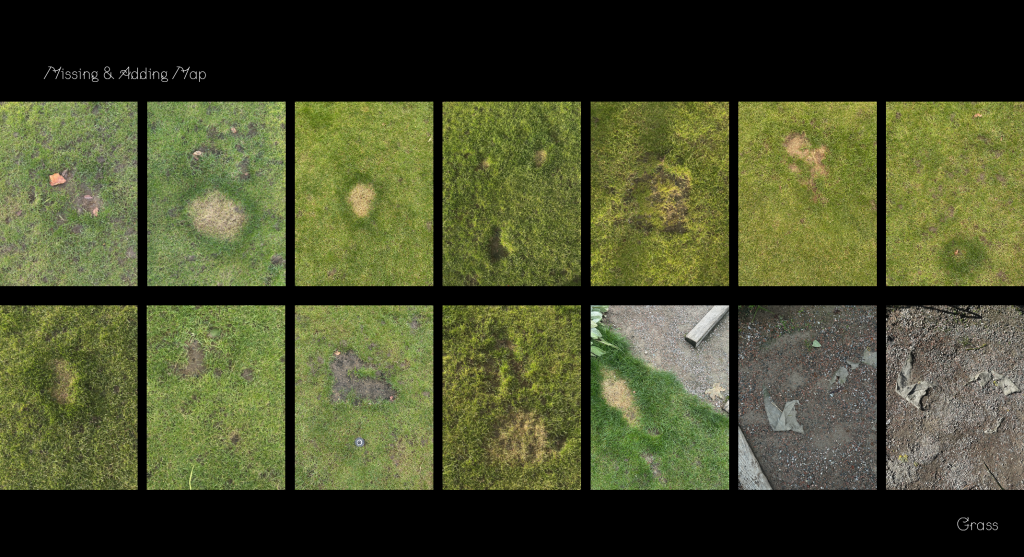
I went to the park almost everyday to find something special. One that led my curiosity is the missing parts of the grassland. It might be because the repeated footsteps, temporary events, or uneven sunlight gradually wear away the surface, which showing that even planned green spaces cannot remain fixed. The ground itself records movement and use, reminding me that maintenance and erosion coexist as part of the same living system.
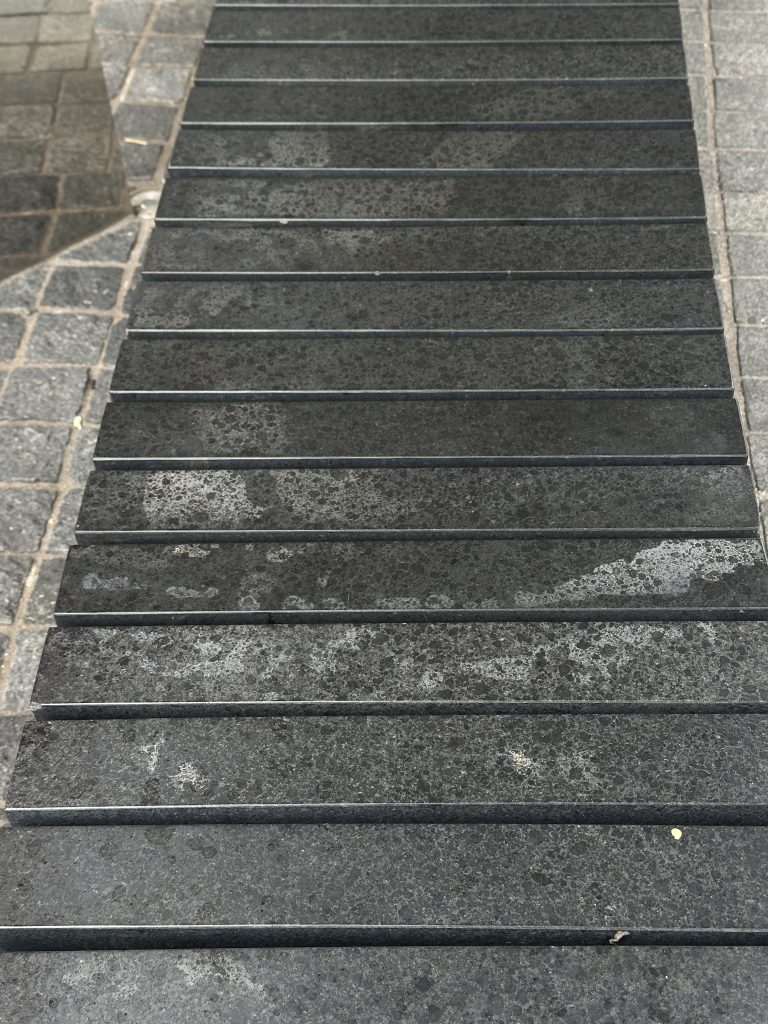
The stone benches also displayed uneven textures — some smooth from frequent sitting, others rough and weathered by rain. These subtle differences made visible the park’s slow dialogue between human touch and natural decay. Observing these contrasts led me to think of organic not as biological, but as a process of constant exchange — where every mark, erosion, or repair becomes part of an evolving life cycle.
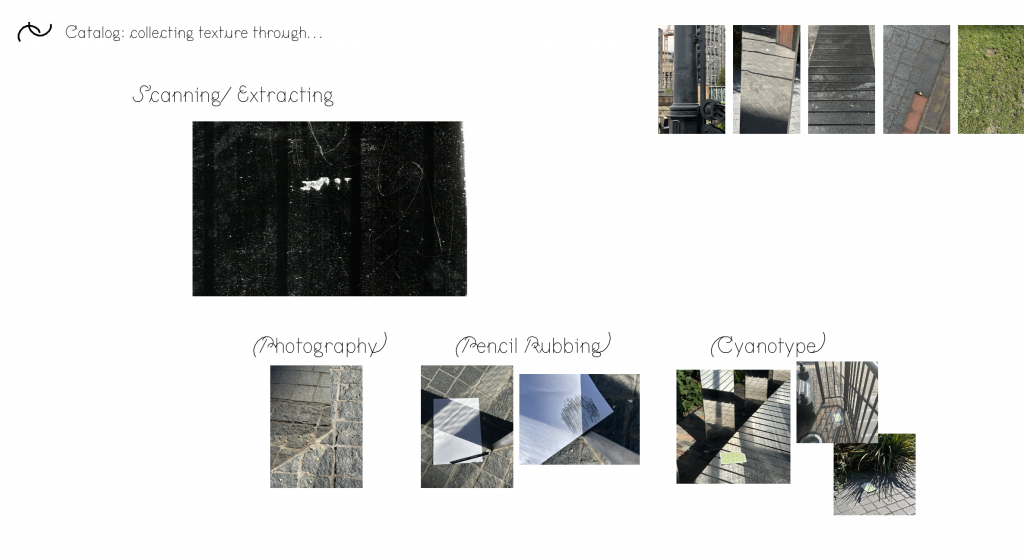
In terms of collecting traces, the striking visual effect created by the mirror canopy columns became a clue I wanted to embed in my outcome. The handheld scanner—with its glitching effects—became a better tool to capture surface details, and the scanning accidents caused by uneven surfaces symbolise a second, human reading and distortion of the traces.
Leave a Reply