My previous understanding about the brief:
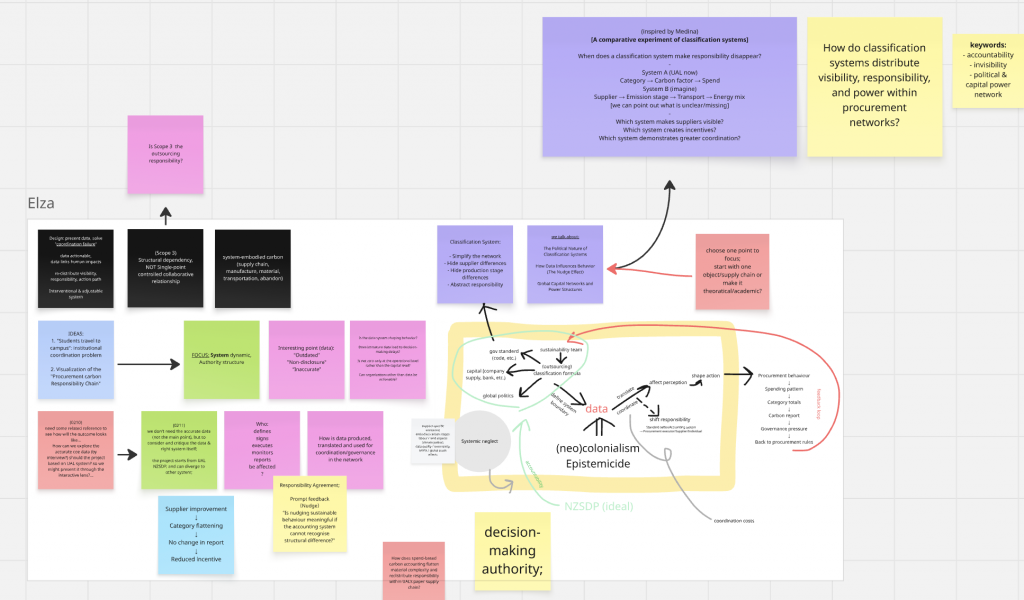
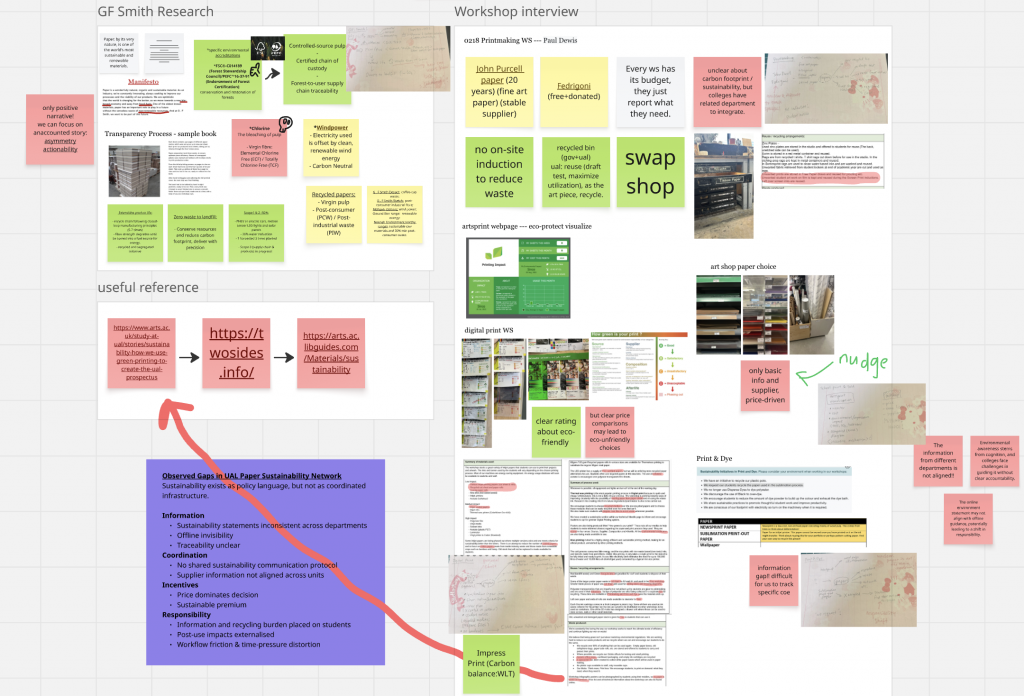
In Week 1 I was in charge of all the workshop research except for publication.
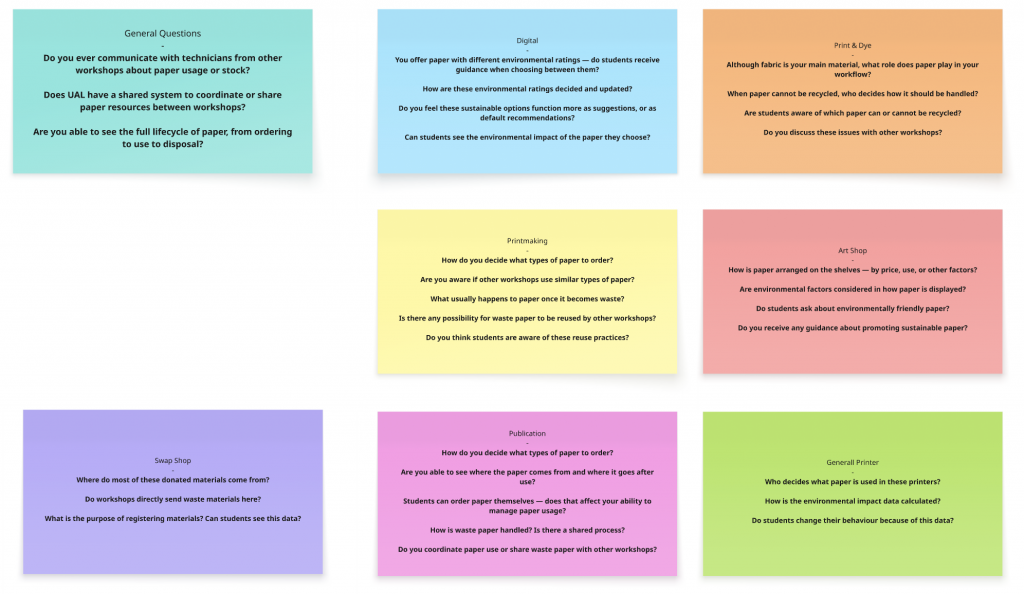
After the week 1 Friday presentation, Ruoying and I designed the questions for the student survey. She was in charge of most of it, and after I got the analysis of the student survey, I designed the specific questions for the survey of 7 departments (Digital Print, Printmaking, Publication, Print & Dye, Art Shop, Swap Shop, General Printer). The questions are based on my previous research and on the keywords: agency, paper lifecycle, cross-departmental coordination, and sustainability incentives.
(the recordings and emails will be privacy )
Core diagnosis
UAL’s paper sustainability system operates as a fragmented network of locally sustainable practices without a unified, institutionally coordinated circular infrastructure.
UAL paper sustainability system is characterized by:
- distributed responsibility
- fragmented coordination
- partial lifecycle visibility
- informal redistribution
- symbolic sustainability metrics
Insight 1 — Lifecycle visibility collapses downstream
Paper lifecycle visibility decreases progressively. Final disposal stage is invisible even to technicians.
Insight 2 — Circularity exists locally but not institutionally
Individual workshops implement reuse practices. However, no centralized system coordinates material flow across workshops. UAL’s circularity is distributed and isolated, not systemic.
Insight 3 — Sustainability responsibility is progressively externalised
Accountability diffuses as paper moves through the system. No actor owns full lifecycle responsibility.
Insight 4 — Coordination operates socially, not structurally
Material redistribution depends on:
- personal relationships
- informal communication
- individual initiative
UAL’s paper network functions through interpersonal coordination rather than systemic coordination.
Insight 5 — Sustainability knowledge exists but is not embedded / integrated in decision-making
Material decisions are driven primarily by:
sustainability metrics- price
- availability
- function
Insight 6 — Sustainability metrics operate symbolically, not operationally
UAL tracks environmental impact via Papercut and Printreleaf.
However:
- metrics do not constrain behaviour
- do not alter system defaults
- do not restructure material flows
Sustainability exists as a reporting system, not an operational system.
Insight 7 — UAL’s sustainability strategy relies on compensatory offsetting rather than preventative circularity
Carbon offset programs such as Printreleaf compensate for paper consumption after it occurs. They do not structurally reduce paper production, distribution, or waste.
Insight 8 — The paper system operates as a decentralized archipelago rather than an integrated network
Each workshop functions as an isolated sustainability island with its own reuse practices. Material circulation between workshops is informal and inconsistent. No unified infrastructure connects these nodes into a coherent circular system.
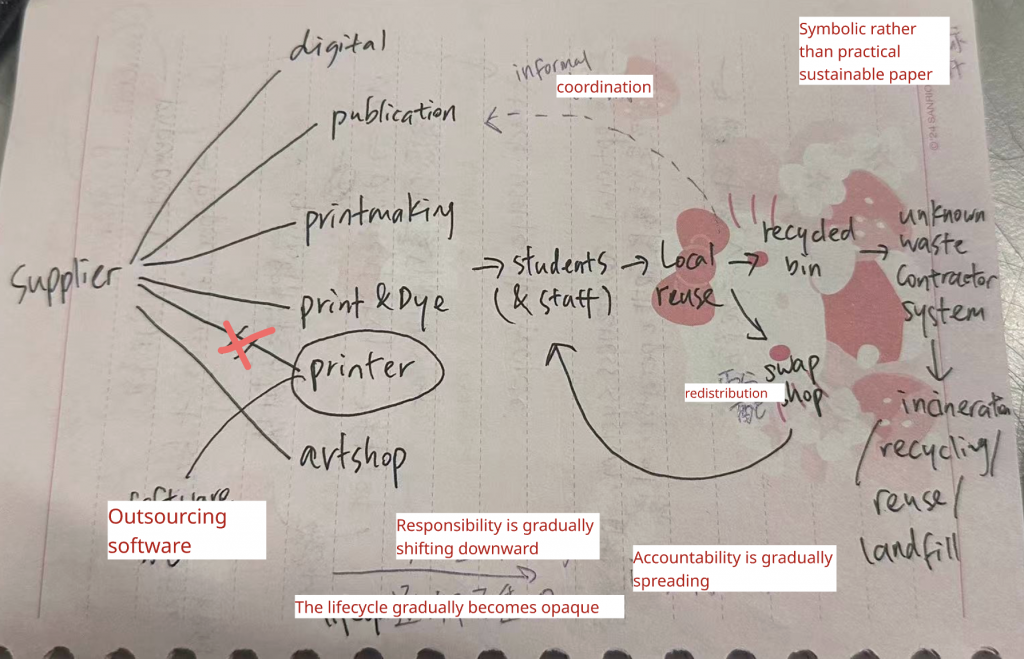
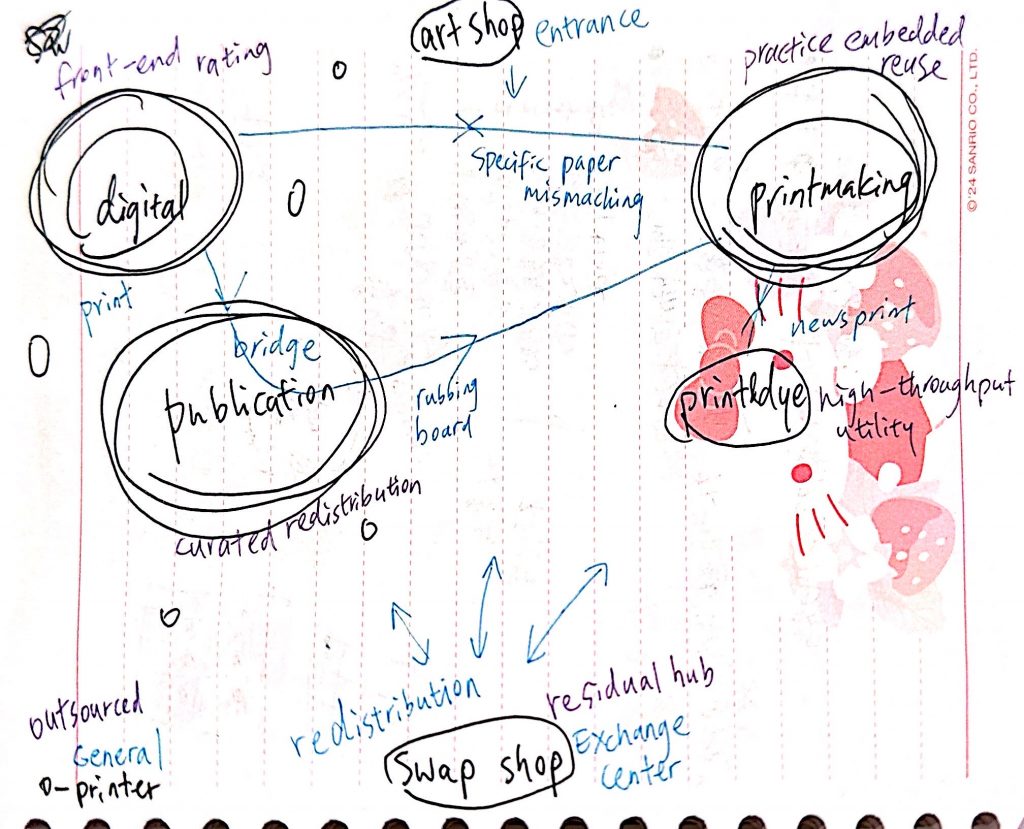
Then I integrated the workshop maps:
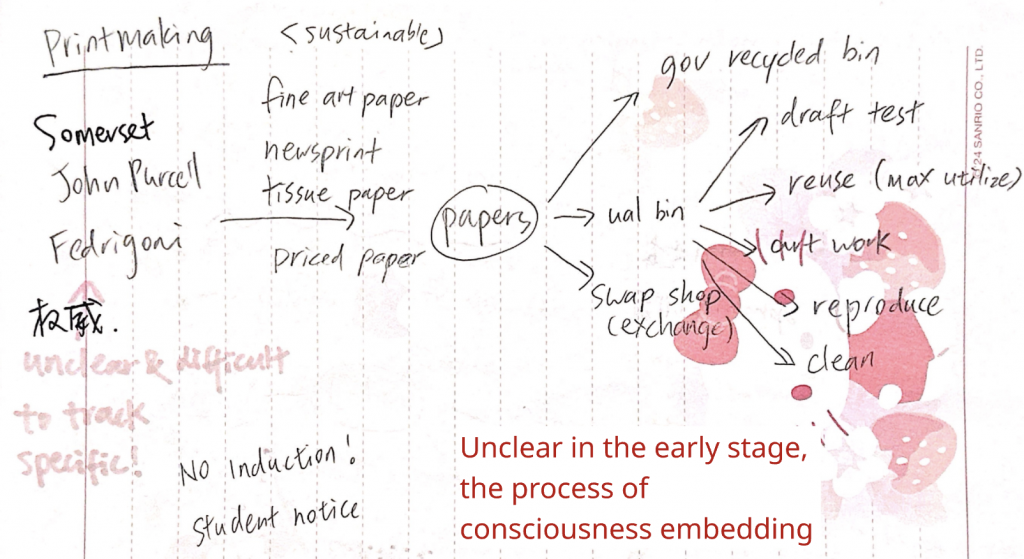
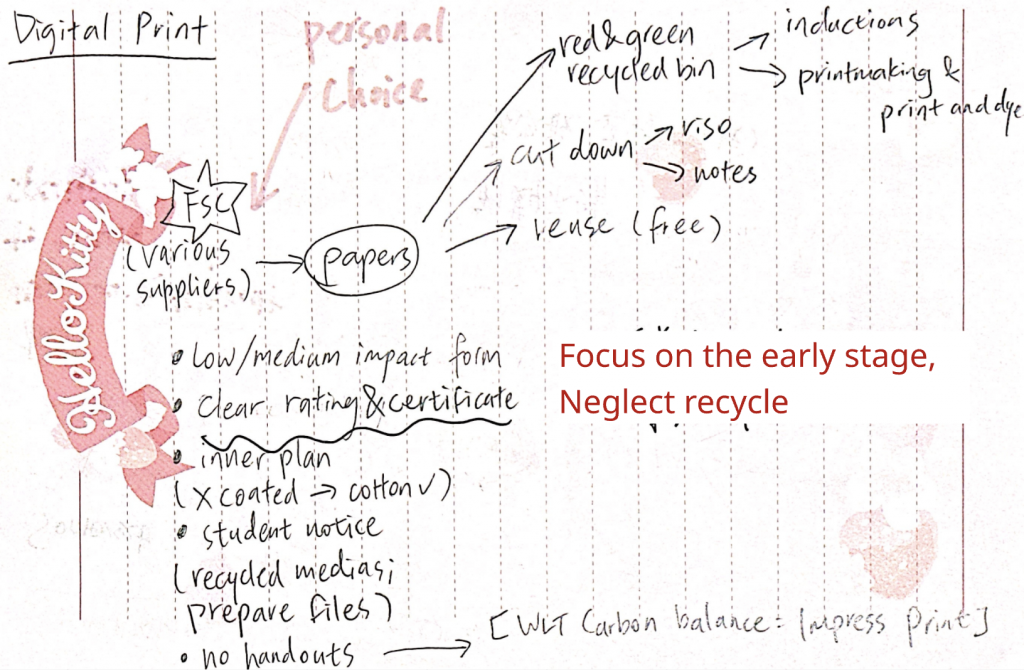
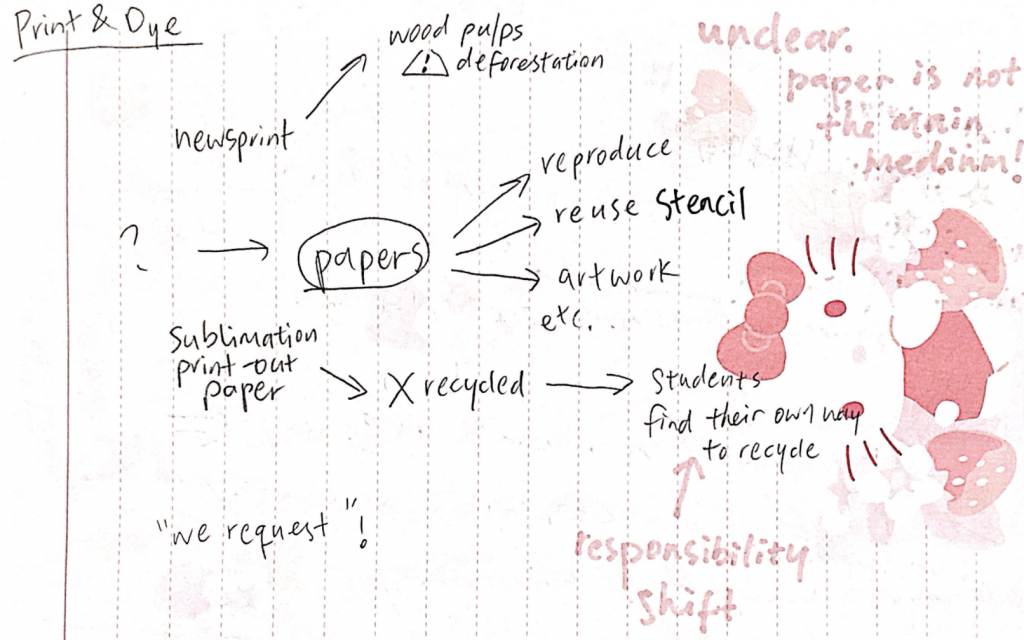
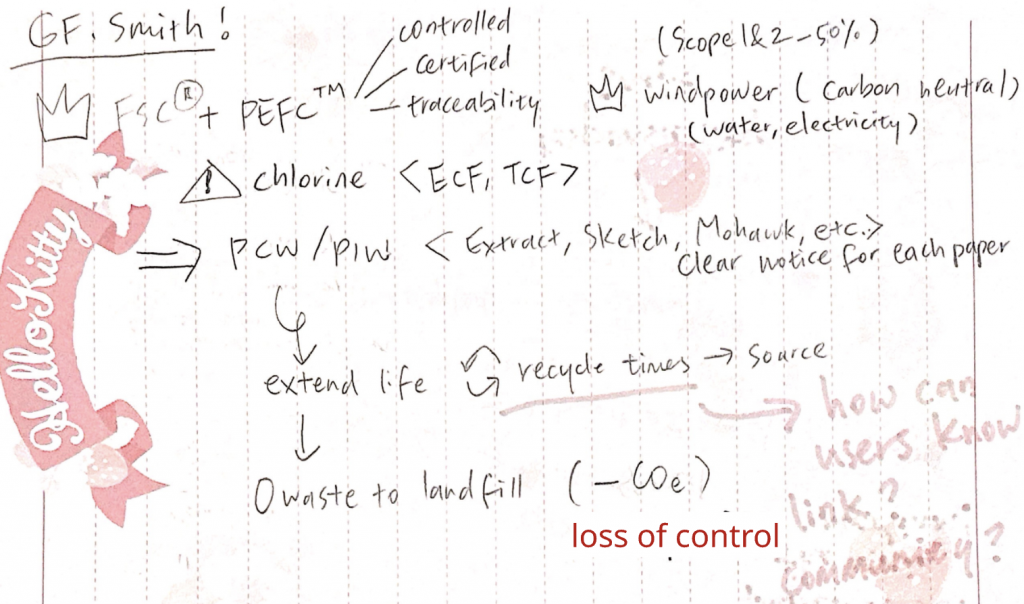
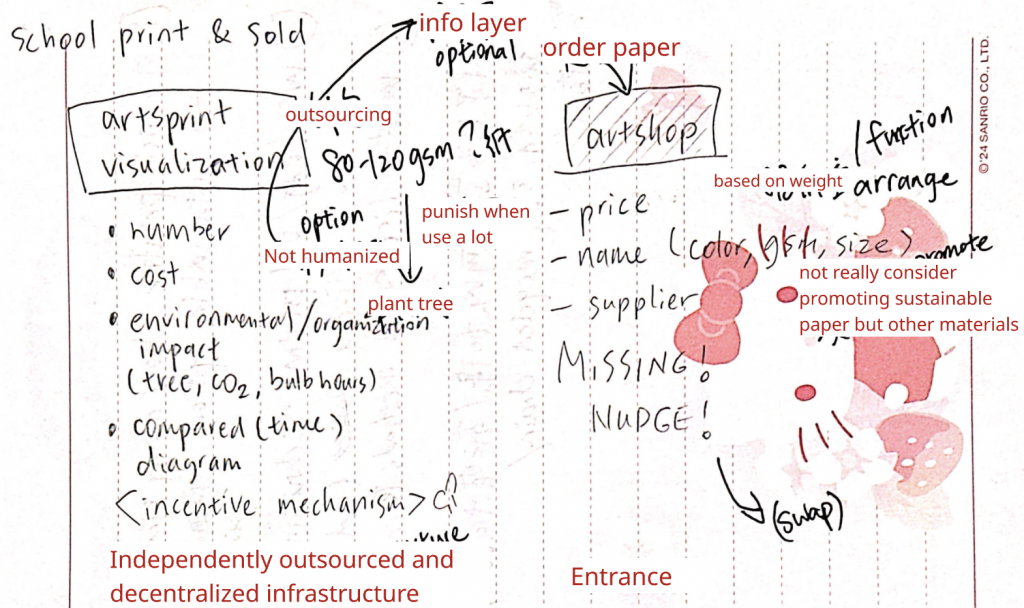
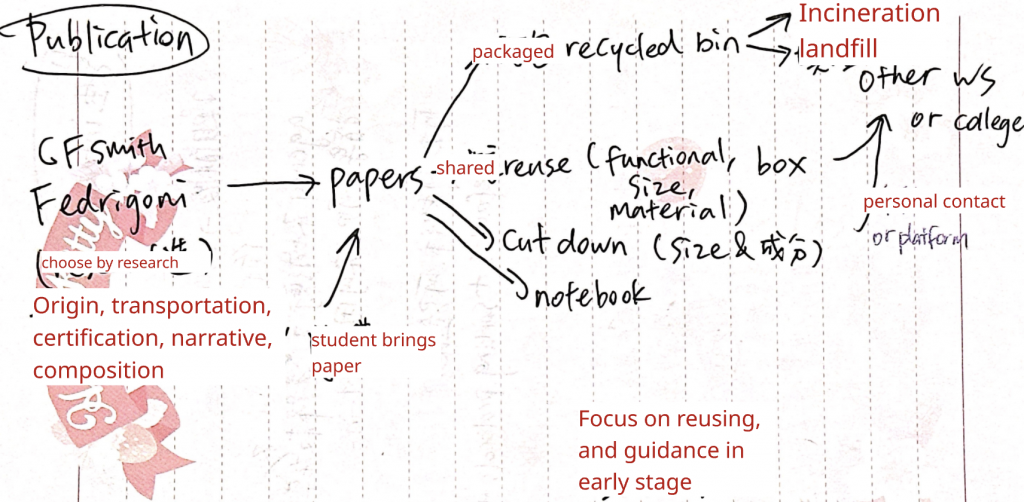
Departments as islands. My plan of Homepage structure:
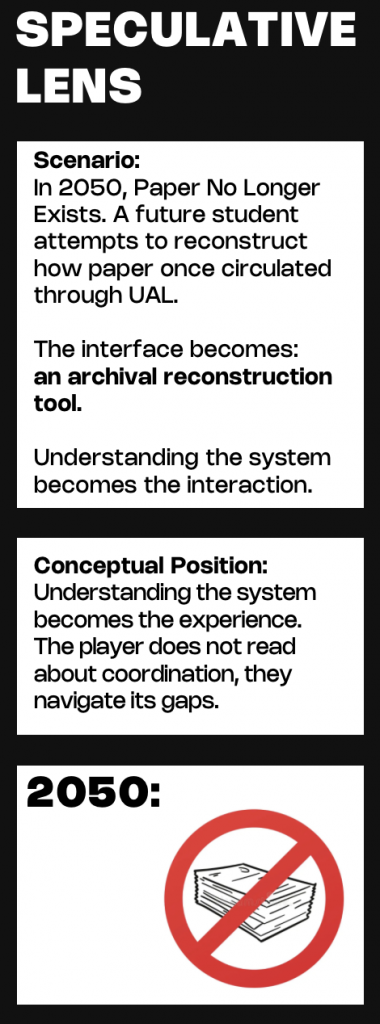
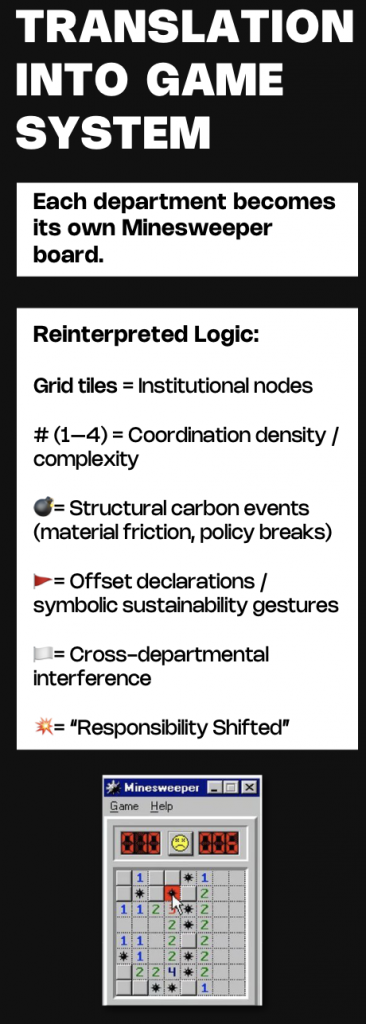
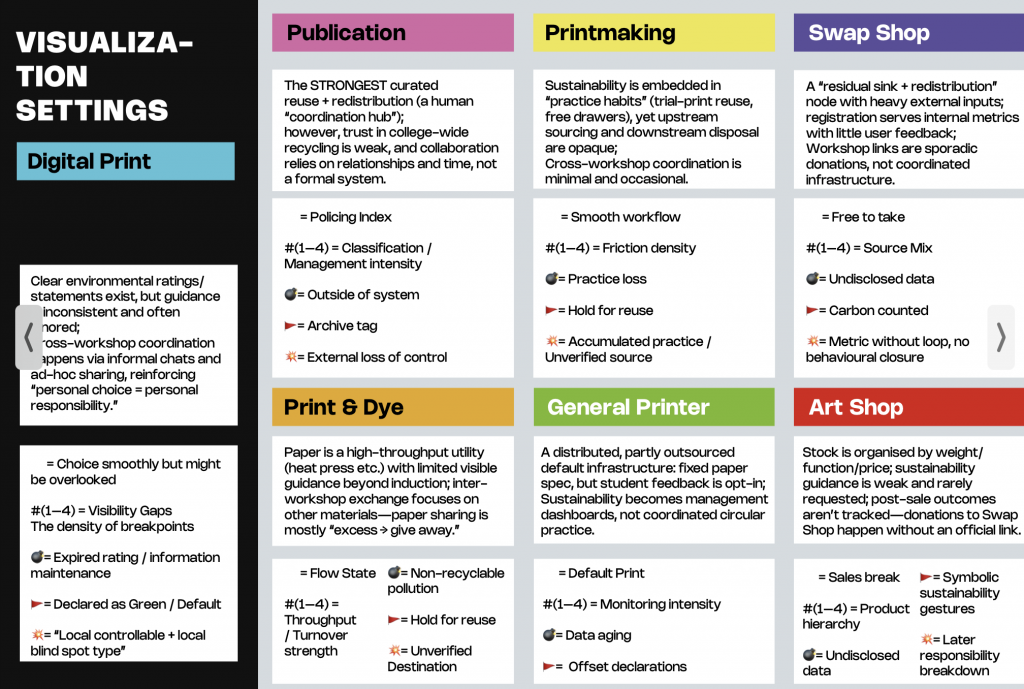
my visual attempts:
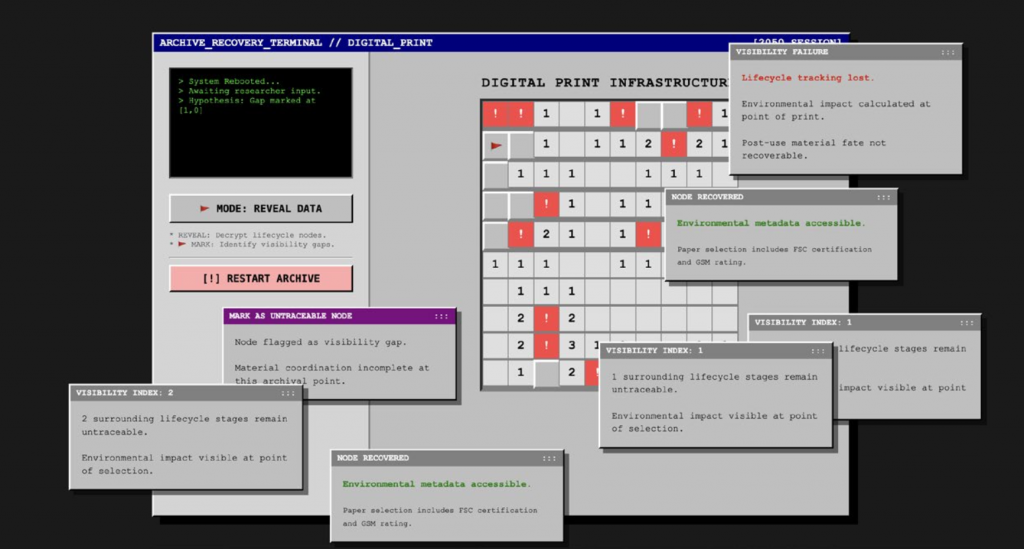
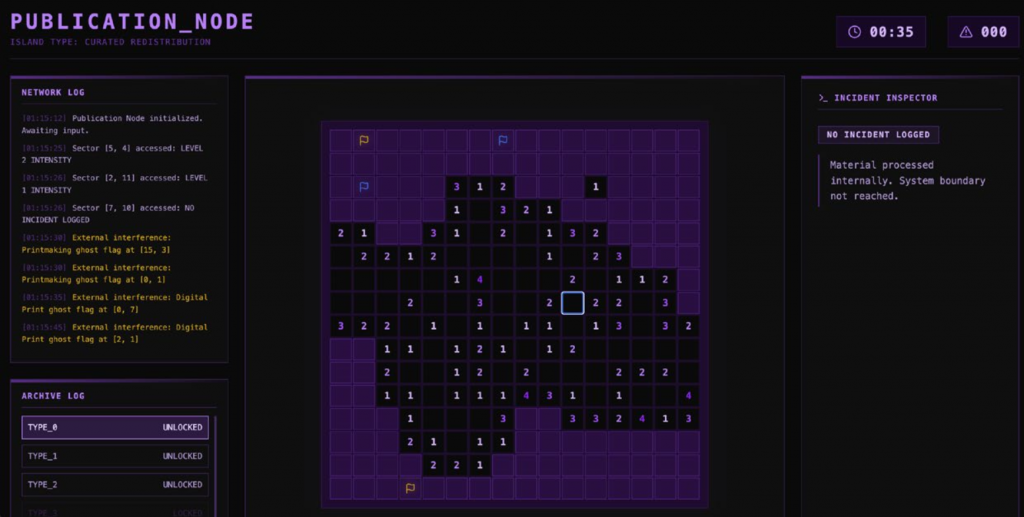
and I built our final outcome: https://sawp-shop.vercel.app/; https://print-making.vercel.app; https://digital-print-gamma.vercel.app/; https://print-dye.vercel.app/
Leave a Reply